81 orphanages closed down
- Posted on
- Comment
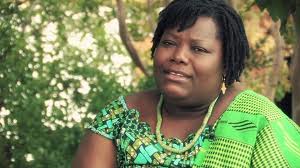 A total of 1,620 children living in orphanages were reunited with parents, relatives, and guardians between January and April this year by the Ministry of Gender, Children and Social Protection.
Consequently, 81 unlicensed orphanages across the country holding the children have been closed down.
The move is to ensure a permanent home for the children whose families the Care Reform Initiative of the Ministry of Gender, Children and Social Protection had been able to trace through a research.
It is established that most children living in orphanages have one surviving parent alive as well as family members.
Mr Alios K.K. Mohl, National Co-ordinator in charge of the Care Reform Initiative, stated that the objective is to establish a more consistent and stable approach to care for orphans and vulnerable children (OVC) in the country so that each will be assured of a permanent home in a supportive and loving family.
“The Care Reform Initiative seeks to promote family base care as a better option to institutional care,” he reiterated.
According to him, the ministry was working to reintroduce the traditional way of caring for children when a parent is absent.
He stated that research by the ministry had revealed that some of the kids were not entirely orphans.
Mr Mohl said the reunification exercise was a complete process where relatives, parents and guardians were sensitised before the children were sent back.
“We do not impose the children on the families, relatives and guardians; they have to accept the children willingly,” he noted.
In the process of sensitisation, Mr Mohl stated that some parents said they were told that their wards would be well catered for, that was why they let them go.
Mr Mohl stated that some opinion leaders were hindrances in some of the communities, claiming that they didn’t understand why the homes were being closed. But with education, they understood and allowed the process to be carried out peacefully.
Speaking about challenges, the National Co-ordinator said that there were not enough resources to support families taking in the children.
However, he stated that some families with extreme poverty issues have been absorbed on government’s social intervention programmes.
Mr Mohl noted that the last reunification process was supported by UNICEF and donors.
By Emefa Abla Adjei
ABOUT: Nana Kwesi Coomson
 [email protected]
 An Entrepreneur, Corporate Social Responsibility, Corporate Communications Executive and Philanthropist. Editor-in-Chief of www.233times.com. A Senior Journalist with Ghanaian Chronicle Newspaper. An alumnus of Adisadel College where he read General Arts. His first degree is in Bachelor of Arts - Political Science (major) and History (minor) from the University of Ghana. He holds MSc in Corporate Social Responsibility (CSR) and Energy with Public Relations (PR) from the Robert Gordon University in the United Kingdom. He is a 2018 Mandela Washington Fellow who studied at Clark Atlanta University in USA on the Business and Entrepreneurship track.
View all posts by: Nana Kwesi Coomson


 (Selorm) |
  (Nana Kwesi)