Petroleum product prices to go up 3%
- Posted on
- Comment
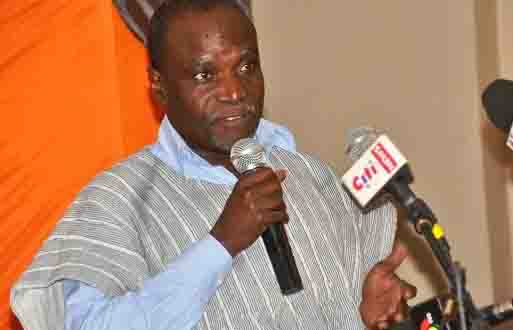 The 17.5 percent Special Petroleum Tax imposed by government could translate into a three percent upward revision in petroleum prices in the interim, Moses Asaga, Chief Executive Officer (CEO) of the National Petroleum Authority (NPA) has said.
Mr Asaga said the Special Petroleum Tax would not result in a 17.5 percent increase in the prices of petroleum products.
Speaking to the media in Accra on Thursday, Mr Asaga said government introduced the harsh tax to increase revenue.
He said the government would continue to adhere to the automatic adjustment formula with the application of the special tax.
Mr. Asaga mentioned that the price of Liquefied Petroleum Gas (LPG) would drop by 10 percent while the prices of Residual Fuel Oil (RFO) used by industries and premix fuel for fishermen would remain the same.
Finance Minister Seth Terkper on Wednesday proposed a bill to Parliament requesting that the new tax policy should be considered.
The Majority consented to the bill after the Minority walked out following an unfair debate on the bill.
A number of people, in an interview with BUSINESS GUIDE on Wednesday, said they were at a loss as to why the government rushed to impose the Special Petroleum Tax on the populace.
The Finance Minister, during his presentation of the annual budget statement to Parliament, noted that “crude oil prices on the world market have experienced a declining trend in recent times, dipping to under US$90 a barrel in July from a January average of US$107 and declining further to under US$80 per barrel in November 2014.”
He also referred to the October 2014 WEO, which said “crude oil prices were expected to average US$99.4 a barrel in 2015, falling further to around US$97.3 in 2016.
However, recent market sentiments point to weaker crude oil prices than those predicted by the WEO.”
Mr Terkper further stated that “commodity prices have declined in recent months and are expected to fall further in line with futures markets owing mostly to improved supply prospects and weak global demand.”
Some people have accused government of mismanaging the country’s economy.
By Samuel Boadi
ABOUT: Nana Kwesi Coomson
 [email protected]
 An Entrepreneur, Corporate Social Responsibility, Corporate Communications Executive and Philanthropist. Editor-in-Chief of www.233times.com. A Senior Journalist with Ghanaian Chronicle Newspaper. An alumnus of Adisadel College where he read General Arts. His first degree is in Bachelor of Arts - Political Science (major) and History (minor) from the University of Ghana. He holds MSc in Corporate Social Responsibility (CSR) and Energy with Public Relations (PR) from the Robert Gordon University in the United Kingdom. He is a 2018 Mandela Washington Fellow who studied at Clark Atlanta University in USA on the Business and Entrepreneurship track.
View all posts by: Nana Kwesi Coomson


 (Selorm) |
  (Nana Kwesi)