Funeral homes to reject bodies soon
- Posted on
- Comment
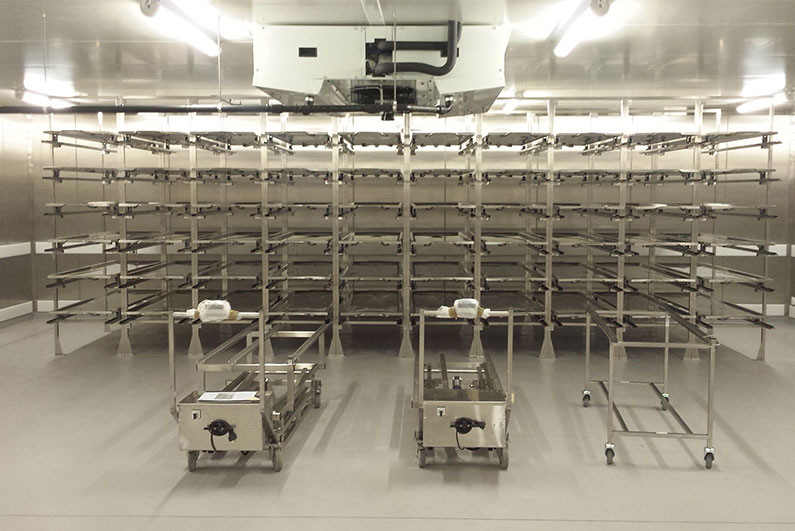
Two prominent funeral homes, one in Accra and the other at Lashibi, both in the Greater Accra Region, are grappling with high demand for storage.
The situation has been fuelled by restrictions on elaborate funerals, which has reduced burials.
In view of this, the homes say they might soon start turning corpses away due to lack of storage space.
Managing Director of the Lashibi Funeral Home, Dr Andrew Ananie Arkutu said this in an interview with The Finder on how the novel coronavirus was impacting on the work of players in the funeral business.
Dr Arkutu said, “People continue to die from causes other than COVID-19, but there is a limit to how many we can store. Soon, many of the private mortuaries will also become congested. Right now I think it’s been mainly the public mortuaries, but it will soon reach down to the level of the private mortuaries.
“As some mortuaries have certain policies: for example, we will not put one body on top of another; so it will reach a point where we will have to turn bodies away. Once we reach capacity, that’s it; then what will people do?” he quizzed.
“The public sector is choked, and the private sector is beginning to feel the pressure. It’s mounting, clearly mounting everywhere. So we are in a very serious dilemma”, he stated.
He explained that following the outbreak of the virus and the subsequent ban placed on large funerals by government, “some families have postponed their funerals. The result is that many of the public mortuaries are getting severely congested, not because of the number of deaths due to the coronavirus, but by the fact that people are not burying as quickly as government has encouraged us to.”
The result is that many funerals have been postponed. People will rather wait. We’ve spoken to a number of our clients whose relatives’ bodies are with us and who had planned their funerals for the past two or three weeks and into next month. Most of them have decided to wait and see.”
The hope is that the President will lift the ban on large funerals, even though we’ve tried to point out to them that that is risky because there is no scientific information for the President to have a basis to decide that they should lift the ban on [large] funerals, because separation is one of the most effective ways we have in poor, developing countries for reducing the rate of infection, and if we ignore that, if we discard that, and the numbers of people dying from COVID-19 really increases, then there will not only be huge pressures on our health facilities, but also on our burial facilities.”
He also warned that the nation will soon run out of burial places for its dead. This assertion, though not linked to the coronavirus, was inevitable, as the existing burial facilities were inadequate to cater for the dead and ensure decent burials.
To this end, he admonished families to resort to cremation as a way of sending off their dead. Though he conceded that cremation was not widely accepted in Ghanaian culture, he explained that “cremation, like the burial, is what comes after the funeral. There is a misconception out there about it. But it is an alternative we should consider, because after the cremation, the space needed to store the ashes is very small.”
Though he said that the outbreak of the virus has not affected the home’s funeral operations within the capital, service in the regions has experienced a decline.
Managing Director of Gillman and Abbey Funeral Services, John Coffie said that his outfit had already had to turn away corpses from potential clients because their storage facilities were full.
In his words, “our priority is the respect for the dead, so whenever our mortuary is full, we do not take any bodies. As soon as we get the call, we are open and frank and we tell you that our mortuary is full so we cannot accept this body, because we do not want to do anything that is contrary to our vision.”
He however stated that with the organisation of some private funerals, his facility was no longer full, though he did say that “whenever our mortuary is full we turn them away so it is likely. As we speak we have limited storage space so if funerals are not being conducted to bury some of the deceased in our mortuaries, we’ll get to a point where we wouldn’t be able to receive any because mortuary is full.”
He put the occupation of the mortuaries down to the belief in paying last respects to the dead per the Ghanaian culture.
He said, “We believe in paying our last respects, and our belief is for a mass gathering to show the works of the dead – to show who the dead person was when he was alive. So we have a few private burials alright, but only a few people are doing that. Majority are still holding on to see a change in what we are currently experiencing, so they can organise a funeral for their loved ones.”
By Selorm GBORBIDZI, Accra
ABOUT: Nana Kwesi Coomson
 [email protected]
 An Entrepreneur, Corporate Social Responsibility, Corporate Communications Executive and Philanthropist. Editor-in-Chief of www.233times.com. A Senior Journalist with Ghanaian Chronicle Newspaper. An alumnus of Adisadel College where he read General Arts. His first degree is in Bachelor of Arts - Political Science (major) and History (minor) from the University of Ghana. He holds MSc in Corporate Social Responsibility (CSR) and Energy with Public Relations (PR) from the Robert Gordon University in the United Kingdom. He is a 2018 Mandela Washington Fellow who studied at Clark Atlanta University in USA on the Business and Entrepreneurship track.
View all posts by: Nana Kwesi Coomson


 (Selorm) |
  (Nana Kwesi)