2020 election petition: March 4 is the d-day!
- Posted on
- Comment
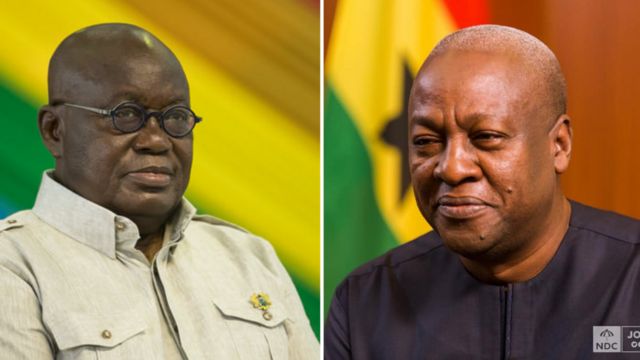
– Supreme Court to deliver final judgment on the 2020 election petition
The Supreme Court has fixed March 4, 2021 to deliver the final judgment on the 2020 election petition trial.
This follows the grant of leave to the petitioner’s lawyers to file their closing addresses by close day today, February 23, 2021.
The seven-member panel, on February 11, ordered lawyers in the petition to file their closing addresses by February 17.
The lawyers of the Electoral Commission (EC) and President Nana Addo Dankwa Akufo Addo filed their respective addresses on February 11.
However, counsel for former President John Dramani Mahama, Mr Tsatsu Tsikata, did not file his closing address.
He explained to the Supreme Court that they had filed an application for review, of which they were optimistic would succeed, and same would advance their case.
Mr Tsikata argued that parties in the case would suffer no prejudice once they had elected not to adduce evidence and close their cases.
He said the application for review and stay of proceedings was evident before the court and it had dismissed same.
He denied that ex-President Mahama had arrogated to himself timelines to file his closing addresses.
Lawyers for the two respondents opposed the grant of leave to the petitioner to file his closing address.
Mr Justin Amenuvor, counsel for the EC, said Rule 68 of CI 16 as amended by CI 99, states that no party had the right to stay away from proceedings.
He said ex-President Mahama was only telling the court why he refused to comply with its orders.
Mr Akoto Ampaw, counsel for President Akufo-Addo, said the petitioner was not seeking magnanimity, but was rather asserting a right.
He, therefore, prayed the court to delete paragraphs 10, 13, 14 and 15 of his affidavit in support of his leave application that sought to assert the right of the petitioner.
‘’If the court grants leave, it would undermine the court’s established authority, ’’ he said.
Mr Ampaw said the petitioner had elected to tell the court that it would not be ideal for him to file his closing address.
The seven-member panel, after listening to all arguments, granted leave to the petitioner to file his closing address by today.
The court said it would summon lawyers to appear before it if the need arose for them to explain any issues raised in their respective addresses.
Meanwhile, the Supreme Court, in a 9:0 decision, dismissed a review application by ex-President Mahama praying the court to reopen his case and have Mrs Jean Mensa, the Chairperson of the EC, subpoenaed to testify.
The nine-member panel, presided over by Chief Justice Kwasi Anin Yeboah, said ex-President Mahama’s application lacked merit in its entirety.
This is the third time ex-President Mahama’s review application had been dismissed by unanimous decision.
The Supreme Court said its review jurisdiction should not be based on emotional reaction and that the success of ex-President Mahama’s case was dependent on his evidence.
It further held that the review application failed to meet the criteria of review application set out under Rule 54 of the Supreme Court rules; namely, CI 16 as amended by CI 99.
The justices stated that ex-President Mahama failed to demonstrate any exceptional circumstance that could have led to a miscarriage of justice, adding that he had also not introduced any new evidence for the court to change its decision.
Moving the application for review, Mr Tsatsu Tsikata, counsel for ex-President Mahama, who sounded prophetic, cited a Bible verse to support his case.
And this verse is Hosea 8:7, which reads, “For they sow the wind, and they shall reap the whirlwind. The standing grain has no heads; it shall yield no flour; if it were to yield, strangers would devour it.”
He argued that the ruling of the court on February 16 had some fundamental errors of law and same had occasioned a miscarriage of justice.
He was of the opinion that the Supreme Court failed to avert its mind on Section 72 of the Evidence Act, which granted the petitioner the opportunity to subpoena EC Chairperson Mrs Mensa, but rather depended on Black’s Law Dictionary, the most widely used law dictionary in the United States.
Mr Tsikata further stressed the need to allow ex-President Mahama to reopen his case so the EC chairperson would testify and be accountable to the people of Ghana.
According to him, in deciding on his arguments on fair trial, the justices should rule based on their conscience, fidelity and judicial oath.
He was of the view that the February 16 ruling of the court was in breach of Article 296 of the constitution and was unreasonable.
Lawyer for the EC, Mr Justin Amenuvor opposed the application for review, saying ex-President Mahama had not met the grounds for it.
He averred that the grounds for review was misconceived and same held no bearing of ratio set out for review application.
He recounted that the Supreme Court, in the previous rulings, made it clear that review applications were not meant for a party to argue his or her case again.
Mr Amenuvor stated that ex-President Mahama’s case had been given fair trial by allowing him to file witness statement after he had closed his case on his own volition.
Responding to Mr Tsikata’s quotation of Hosea 8:7, Mr Amenuvor said: “Do not bring God into court issues. God is a God of conscience and you cannot bring Him to court to support your case.’’
Lawyer for President Nana Akufo-Addo, Mr Ampaw opposed the application for review, saying the petitioner had not demonstrated that a fundamental error of law had occasioned the miscarriage of justice.
He said a look at the ex-President Mahama’s statement of case showed a deliberate omission of the word “evidence,” which was improper.
He said it was misconceived on the part of ex-President Mahama to suggest that the Supreme Court erred by allowing a substantive legislation to triumph over a subsidiary legislation.
‘’The position of the law by the petitioner had been persistently cited out of context,’’ he said.
According to him, no evidence had been led to sustain his (petitioner) right to fair hearing.
In reference to a breach of Article 296 of the Constitution, Mr Ampaw said ex-President Mahama also failed to demonstrate the grounds of allegation of unreasonableness.
On February 16, the Supreme Court dismissed an application by the petitioner to have his case reopened after he had called his third and last witness.
According to the court it did not find any merit in the application and dismissed same.
Mr Mahama, through his lawyers, filed a review and a stay of proceedings, pending the determination of a review application.
Justices on the review panel are Chief Justice Kwasi Anin Yeboah, Samuel Marful-Sau, Yaw Appau, Nene Amegatcher, Professor Ashie Kotey, Mariama Owusu, Gertrude Torkornu, Amadu Tanko, and Professor Henrietta Mensah Bonsu.
-By Elvis DARKO, Accra
ABOUT: Nana Kwesi Coomson
 [email protected]
 An Entrepreneur, Corporate Social Responsibility, Corporate Communications Executive and Philanthropist. Editor-in-Chief of www.233times.com. A Senior Journalist with Ghanaian Chronicle Newspaper. An alumnus of Adisadel College where he read General Arts. His first degree is in Bachelor of Arts - Political Science (major) and History (minor) from the University of Ghana. He holds MSc in Corporate Social Responsibility (CSR) and Energy with Public Relations (PR) from the Robert Gordon University in the United Kingdom. He is a 2018 Mandela Washington Fellow who studied at Clark Atlanta University in USA on the Business and Entrepreneurship track.
View all posts by: Nana Kwesi Coomson


 (Selorm) |
  (Nana Kwesi)