Exiled Taliban leaders return to take charge
- Posted on
- Comment
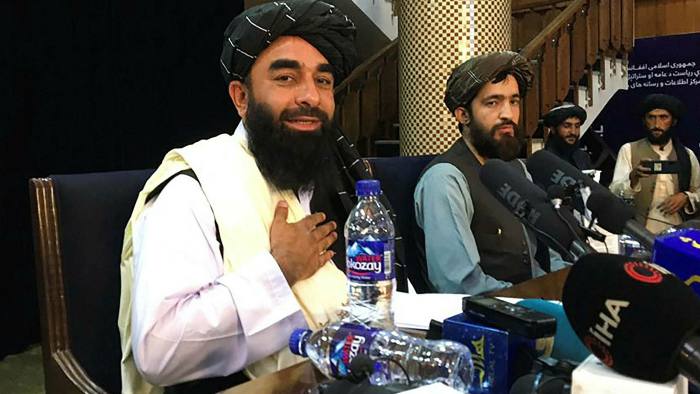
The Taliban is rushing to work out how to govern Afghanistan after the militant Islamist group’s exiled leaders came back to a country that has changed profoundly since it was driven from power 20 years ago. While the Taliban has been setting up shadow governors and administrators to rule its conquered territory, the US has been struggling to repair a bungled evacuation plan for thousands of people trying to flee Kabul.
Washington sent 1,000 more troops to Kabul in an attempt to reassert control over the city’s airport after it was overrun by desperate Afghans and foreign citizens. Many local residents were reportedly still struggling to reach the airport on Wednesday.
Taliban militants have set up checkpoints around the city and were turning back some Afghans. General Frank McKenzie, commander of US troops in the region, said he had warned Taliban leaders “against interference in our evacuation”. American citizens in the country were also told that the US government “cannot guarantee” their security as they attempted to make their way to the airport. The US wants to evacuate as many as 9,000 people a day, a big increase from the hundreds being flown out of the country currently.
Zabihullah Mujahid, a Taliban spokesperson who appeared in the group’s first press conference since taking Kabul, said on Tuesday that preparations were under way to form a government. The militants are trying to consolidate power after seizing control of Afghanistan in just over a week and driving President Ashraf Ghani and most senior government officials into exile.
Abdul Ghani Baradar, the Islamist group’s top political leader, arrived in Afghanistan after two decades on Tuesday, flying into the southern city of Kandahar from Qatar, where he has lived since the US secured his freedom from a Pakistani jail in 2018. Baradar, who helped negotiate the 2020 deal with Donald Trump’s administration to withdraw US troops from Afghanistan, is expected to take a leading role in an Islamist government in the coming days. “They have a lot of consolidation to do,” said Rudra Chaudhuri, a senior lecturer at King College London’s Department of War Studies.
“They don’t have a civil service, there is no cadre of administrators,” he said. “They will need parts of the old government to keep this system together and that will require a discussion on transition.”
-FT
ABOUT: Nana Kwesi Coomson
 [email protected]
 An Entrepreneur, Corporate Social Responsibility, Corporate Communications Executive and Philanthropist. Editor-in-Chief of www.233times.com. A Senior Journalist with Ghanaian Chronicle Newspaper. An alumnus of Adisadel College where he read General Arts. His first degree is in Bachelor of Arts - Political Science (major) and History (minor) from the University of Ghana. He holds MSc in Corporate Social Responsibility (CSR) and Energy with Public Relations (PR) from the Robert Gordon University in the United Kingdom. He is a 2018 Mandela Washington Fellow who studied at Clark Atlanta University in USA on the Business and Entrepreneurship track.
View all posts by: Nana Kwesi Coomson


 (Selorm) |
  (Nana Kwesi)