Natural disasters cost world’s insurers $120-billion in 2021
- Posted on
- Comment
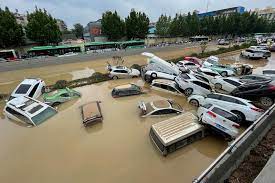
Marked by devastating hurricanes and cold snaps in the United States, 2021 proved the second-most costly year on record for the world’s insurers, Munich Re said on Monday, warning that extreme weather was more likely with climate change.
Insured losses from natural catastrophes totalled around US$120-billion last year, second only to the US$146-billion in damages during the hurricane-ridden year of 2017.
The annual tally by Munich Re, the world’s largest reinsurer, is higher than an estimate of US$105-billion that competitor Swiss Re published last month.
The U.S. – ravaged by dozens of tornadoes in December, and by Hurricane Ida and freezes in Texas earlier in the year – accounted for an unusually large portion of the losses, Munich Re said.
“The images of natural disasters in 2021 are disturbing. Climate research increasingly confirms that extreme weather has become more likely,” said Torsten Jeworrek, a member of Munich Re’s board.
Nearly 10,000 people died from natural catastrophes, in line with previous years. Total losses, including those not covered by insurance, were US$280-billion, the fourth-highest on record.
Hurricane Ida, damage from which stretched from New Orleans to New York, resulted in US$36-billion in insured losses. The winter storm that primarily hit Texas resulted in around US$15-billion in losses. Floods in Germany cost billions, too.
“The 2021 disaster statistics are striking because some of the extreme weather events are of the kind that are likely to become more frequent or more severe as a result of climate change,” said Ernst Rauch, chief climate and geo scientist at Munich Re.
Many scientists agree that events in 2021 were exacerbated by climate change and that there is more – and worse – to come as the Earth’s atmosphere continues to warm through the next decade and beyond.
The costliest year on record was 2017, with hurricanes Harvey, Irma and Maria. Other severe years were 2011, when big earthquakes hit Japan and New Zealand, and 2005, when Hurricane Katrina ravaged New Orleans.
Insurers have in some cases been raising the rates they charge as a result of the increasing likelihood of disasters, and in some places have stopped providing coverage.
As insurers warn about climate change and the costs associated with it, they themselves are under pressure from activists to stop insuring dirty industries.
-theglobeandmail
ABOUT: Nana Kwesi Coomson
 [email protected]
 An Entrepreneur, Corporate Social Responsibility, Corporate Communications Executive and Philanthropist. Editor-in-Chief of www.233times.com. A Senior Journalist with Ghanaian Chronicle Newspaper. An alumnus of Adisadel College where he read General Arts. His first degree is in Bachelor of Arts - Political Science (major) and History (minor) from the University of Ghana. He holds MSc in Corporate Social Responsibility (CSR) and Energy with Public Relations (PR) from the Robert Gordon University in the United Kingdom. He is a 2018 Mandela Washington Fellow who studied at Clark Atlanta University in USA on the Business and Entrepreneurship track.
View all posts by: Nana Kwesi Coomson


 (Selorm) |
  (Nana Kwesi)