New ‘Lucifer’ bee with devil-like horns found in Australia
- Posted on
- Comment
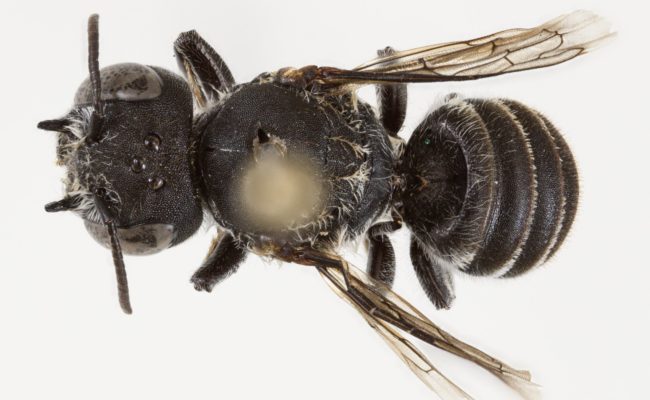
Australian scientists have discovered a new native bee species with tiny horns – and given it a suitably devilish name.
Researchers found the Megachile Lucifer while observing a rare wildflower that only grows in the Bremer Ranges in Western Australia’s Goldfields region, 470km (292mi) east of Perth.
The “highly distinctive, prominent horns” are only on the female bee and may be used as a defence mechanism, to gather pollen or nectar, or to collect materials such as resin for nests.
The study’s lead scientist said she was inspired to use the name Lucifer as she was watching the Netflix show of the same name at the time. She adds that it is the first new member of this bee group in 20 years.
“The female had these incredible little horns on her face,” said Dr Kit Prendergast from Curtin University .
“When writing up the new species description I was watching the Netflix show Lucifer at the time, and the name just fit perfectly. I am also a huge fan of the Netflix character Lucifer so it was a no-brainer.”
Lucifer – which means “light bringer” in Latin – is also a reference to shining light on the need for better conservation of native bee species and greater understanding of how endangered plants are pollinated, she said.
The report, which was published in the Journal of Hymenoptera Research, also called for the area in and around where the new bee species and rare wildflowers were found to be “formally protected and gazetted as conservation land that cannot be cleared”.
“Because the new species was found in the same small area as the endangered wildflower, both could be at risk from habitat disturbance and other threatening processes like climate change,” she said, adding that many mining companies do not include native bees when assessing the environmental impact of their operations.
“So we may be missing undescribed species, including those that play crucial roles in supporting threatened plants and ecosystems.
“Without knowing which native bees exist and what plants they depend on, we risk losing both before we even realise they’re there.”
-BBC
ABOUT: Nana Kwesi Coomson
 [email protected]
 An Entrepreneur, Corporate Social Responsibility, Corporate Communications Executive and Philanthropist. Editor-in-Chief of www.233times.com. A Senior Journalist with Ghanaian Chronicle Newspaper. An alumnus of Adisadel College where he read General Arts. His first degree is in Bachelor of Arts - Political Science (major) and History (minor) from the University of Ghana. He holds MSc in Corporate Social Responsibility (CSR) and Energy with Public Relations (PR) from the Robert Gordon University in the United Kingdom. He is a 2018 Mandela Washington Fellow who studied at Clark Atlanta University in USA on the Business and Entrepreneurship track.
View all posts by: Nana Kwesi CoomsonRECOMMENDED STORIES

10 People killed in wedding bus crash
Jun 12, 2023 comment
Australia cancels Novak Djokovic’s visa again
Jan 14, 2022 comment



 (Selorm) |
  (Nana Kwesi)