Reliance on vaccine imports threatens Africa’s health security – WHO
- Posted on
- Comment
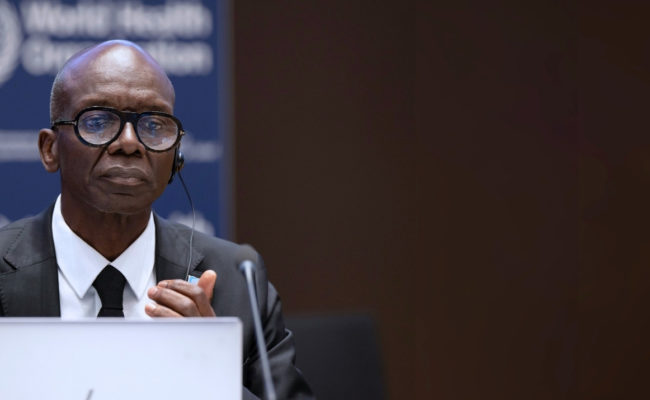
Dr Mohamed Yakub Janabi, the Regional Director for the World Health Organisation (WHO) in Africa, has raised concerns about Africa’s heavy reliance on imported vaccines, describing the situation as a major threat to the continent’s health security.
According to him, Africa currently imports about 99% of its vaccines, a development he said undermines efforts to build resilient and self-sufficient health systems across the continent.
Speaking in an interview with TV3 on Sunday, February 1, 2026, Dr Janabi stressed the urgent need for Africa to invest in local manufacturing of medicines and therapeutic devices, particularly vaccines.
“We want to see local manufacturing of medicines and therapeutic devices, especially vaccines. Africa imports 99% of its vaccines, and for health security, this is not good. We want to see universal health coverage. No one should be left behind,” he said.
Dr Janabi explained that strengthening local production capacity is central to WHO’s broader health agenda for Africa, which also prioritises equitable access to healthcare services for all populations.
Beyond vaccine production, the WHO Africa Regional Director highlighted antimicrobial resistance as one of the most pressing public health threats facing the continent, describing it as a “slow-motion pandemic.”
“We want to combat antimicrobial resistance; it is a slow-motion pandemic. Not so long ago, when I was in active practice, I used three days to treat a UTI. Today, it takes more than a week, especially in women. Some tell you they take antibiotics for a long time, and nothing is happening. This is because the bacteria have become pretty much resistant to these medicines,” he noted.
He further indicated that the WHO will intensify efforts to address both communicable and non-communicable tropical diseases while also expanding Africa’s health workforce to meet growing demands.
“We also wish to see the treatment of communicable and non-communicable tropical diseases. We need to increase our health manpower. These are the priorities of the WHO in Africa,” Dr Janabi said.
Dr Janabi’s comments come as African countries continue to explore strategies to strengthen domestic health systems and reduce dependence on external supply chains for critical medical products.
ABOUT: Nana Kwesi Coomson
 [email protected]
 An Entrepreneur, Corporate Social Responsibility, Corporate Communications Executive and Philanthropist. Editor-in-Chief of www.233times.com. A Senior Journalist with Ghanaian Chronicle Newspaper. An alumnus of Adisadel College where he read General Arts. His first degree is in Bachelor of Arts - Political Science (major) and History (minor) from the University of Ghana. He holds MSc in Corporate Social Responsibility (CSR) and Energy with Public Relations (PR) from the Robert Gordon University in the United Kingdom. He is a 2018 Mandela Washington Fellow who studied at Clark Atlanta University in USA on the Business and Entrepreneurship track.
View all posts by: Nana Kwesi Coomson



 (Selorm) |
  (Nana Kwesi)