WHO Chief spells out 3 Coronavirus lessons
- Posted on
- Comment
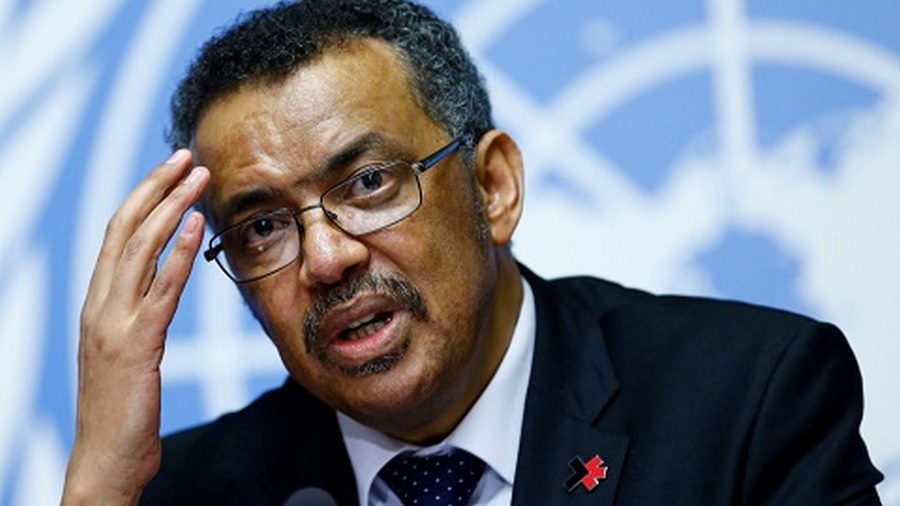
The COVID-19 pandemic has so far had three lessons for all member states of the World Health Organization (WHO) and the United Nations (UN) agency itself, WHO Director-General, Tedros Adhanom Ghebreyesus said here on Monday.
Addressing the 148th session of the WHO Executive Board, Tedros said that first of all “all of us must have the humility to learn, to change, to innovate and to grow.”
The first specific lesson is about preparedness and response to the pandemic.
“COVID-19 surprised even some of the world’s richest and most powerful nations.
It caught them unprepared and revealed a collective failure to invest in emergency preparedness,” he said. He acknowledged that “previous tools, such as Joint External Evaluations based on expert review of national preparedness, have value, but the pandemic has shown they have not been sufficient.”
Accordingly, he said he had proposed a “new mechanism for strengthening preparedness based on mutual trust and mutual accountability — the Universal Health and Preparedness Review.”
The second lesson is that the health of humans, animals and the planet are intimately intertwined.
Recalling that more than 70 percent of the emerging diseases discovered in recent years are linked to animal-to-human transmission, Tedros emphasized the need to “protect and promote human health by fundamentally enhancing the monitoring and management of the risks at the interface between humans, animals and ecosystems.”
In this context, the full range of issues must be addressed “that affect the relationship between humans, animals and the planet, including deforestation, intensive agriculture, pollution, climate change and so on.”
The third lesson from COVID-19 is that “the world needs a strong WHO.” The organization’s member states have “identified that one of the biggest barriers to WHO being the best it can be is sustainable and predictable financing,” he said.
For this end, Tedros asked the WHO Foundation to generate one billion U.S. dollars in the next three years, of which 70 percent to 80 percent will be for the WHO, while the remainder for other public health organizations focused on civil society.
“One year into the greatest crisis of our time, there is no question that we still face unprecedented danger,” he said.
“We also have an unprecedented opportunity to make health the heartbeat of development, and the foundation of a more secure, and more equitable world.”
ABOUT: Nana Kwesi Coomson
 [email protected]
 An Entrepreneur, Corporate Social Responsibility, Corporate Communications Executive and Philanthropist. Editor-in-Chief of www.233times.com. A Senior Journalist with Ghanaian Chronicle Newspaper. An alumnus of Adisadel College where he read General Arts. His first degree is in Bachelor of Arts - Political Science (major) and History (minor) from the University of Ghana. He holds MSc in Corporate Social Responsibility (CSR) and Energy with Public Relations (PR) from the Robert Gordon University in the United Kingdom. He is a 2018 Mandela Washington Fellow who studied at Clark Atlanta University in USA on the Business and Entrepreneurship track.
View all posts by: Nana Kwesi Coomson


 (Selorm) |
  (Nana Kwesi)