Roman Abramovich: New evidence highlights corrupt deals
- Posted on
- Comment
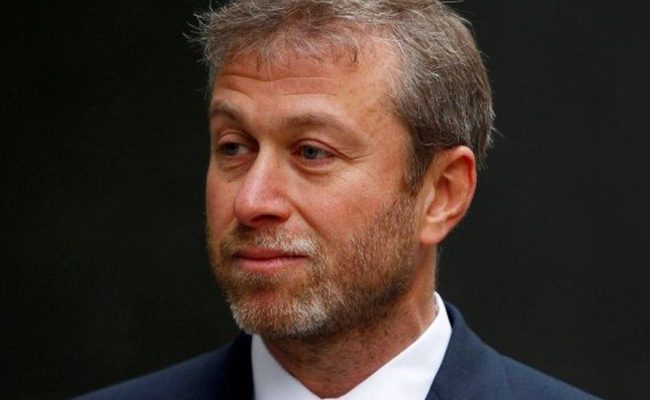
A BBC investigation has uncovered new evidence about the corrupt deals that made Roman Abramovich’s fortune.
The Chelsea owner made billions after buying an oil company from the Russian government in a rigged auction in 1995.
Mr Abramovich paid around $250m (£190m) for Sibneft, before selling it back to the Russian government for $13bn in 2005.
His lawyers say there is no basis for alleging he has amassed very substantial wealth through criminality.
The Russian billionaire was sanctioned by the UK government last week because of his links to Russian President Vladimir Putin.
Mr Abramovich’s assets have been frozen and he has been disqualified as a director of Chelsea Football Club.
Panorama tracked down Russia’s former chief prosecutor, who investigated the deal in the 1990s.
Yuri Skuratov did not know about the secret document, but he independently confirmed many of the details about the Sibneft sale.
Mr Skuratov told the programme: “Basically, it was a fraudulent scheme, where those who took part in the privatisation formed one criminal group that allowed Abramovich and Berezovsky to trick the government and not pay the money that this company was really worth.”
The document also suggests Mr Abramovich was protected by former Russian President Boris Yeltsin.
It says law enforcement files on Mr Abramovich were moved to the Kremlin and that an investigation by Mr Skuratov was stopped by the president.
The document says: “Skuratov was preparing a criminal case for the confiscation of Sibneft on the basis of the investigation of its privatisation. The investigation was stopped by President Yeltsin … Skuratov was dismissed from his office.”
Mr Skuratov was sacked after the release of a sex tape in 1999. He says it was a stitch-up to discredit him and his investigation.
He said: “This whole thing was obviously political, because in my investigations I came very close to the family of Boris Yeltsin, including via this investigation of the Sibneft privatisation.”
Mr Abramovich remained in the Kremlin inner circle when Vladimir Putin came to power in 2000.
The document contains details of another rigged auction two years later, involving a Russian oil company called Slavneft.
Mr Abramovich formed a partnership with another firm to buy Slavneft, but a rival Chinese company was planning to bid almost twice as much.
Many powerful people – from the Kremlin to the Russian parliament – would have stood to lose out if the Chinese won the auction.
The document says that a member of the Chinese delegation was kidnapped when they arrived in Moscow for the auction.
“CNPC, Chinese company, a very strong competitor, had to withdraw from the auction after one of its representatives was kidnapped upon arrival at Moscow Airport and was released only after the company declared its withdrawal.”
The kidnapping story is backed up by independent sources who did not know about the document.
Vladimir Milov was Russia’s deputy energy minister in the run up to the Slavneft sale. He didn’t comment on the kidnapping story, but he said senior political figures had already decided that Mr Abramovich’s partnership would win the auction.
“I said, look, the Chinese want to come in and they want to pay a much bigger price. They say it doesn’t matter, shut up, none of your business. It’s already decided. Slavneft goes to Abramovich, the price is agreed. The Chinese will be dragged out somehow.”
There is no suggestion that Mr Abramovich knew anything about the kidnapping plot, or played any part in it.
His lawyers told the BBC the kidnap claim “is entirely unsubstantiated” and he has “no knowledge of such incident”.
Different factions had been fighting for control of Slavneft and there was widespread opposition to the Chinese bid.
Whatever the reason for the Chinese withdrawal, Mr Abramovich’s partnership had the only bid left on the table. And they bought Slavneft at a knockdown price.
Mr Abramovich’s lawyers say allegations of corruption in the Slavneft and Sibneft deals are false, and he denies he was protected by Mr Yeltsin.
-BBC
ABOUT: Nana Kwesi Coomson
 [email protected]
 An Entrepreneur, Corporate Social Responsibility, Corporate Communications Executive and Philanthropist. Editor-in-Chief of www.233times.com. A Senior Journalist with Ghanaian Chronicle Newspaper. An alumnus of Adisadel College where he read General Arts. His first degree is in Bachelor of Arts - Political Science (major) and History (minor) from the University of Ghana. He holds MSc in Corporate Social Responsibility (CSR) and Energy with Public Relations (PR) from the Robert Gordon University in the United Kingdom. He is a 2018 Mandela Washington Fellow who studied at Clark Atlanta University in USA on the Business and Entrepreneurship track.
View all posts by: Nana Kwesi Coomson


 (Selorm) |
  (Nana Kwesi)