Ghana faces food crisis as dry spell devastates crops
- Posted on
- Comment
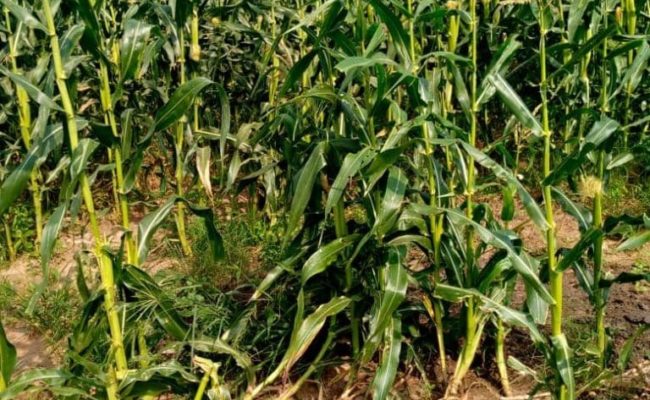
A severe dry spell has hit eight regions in Ghana, threatening the livelihoods of over 980,000 farmers and the country’s food security.
The affected regions, which include the Northern, Upper East, North East, Savannah, Upper West, Bono, Bono East, and Oti, have experienced continuous dry spells, leading to near-drought conditions that have significantly disrupted crop production.
The situation has been exacerbated by the lack of rainfall over the past two months, which has prevented farmers from preparing their farmlands for production.
Those who managed to plant have seen their crops withered and died due to the absence of moisture.
According to the Ministry of Food and Agriculture (MoFA), the dry spell has affected 928,523 farmers, who have lost an estimated investment of GHS 7.4 billion.
The corresponding revenue loss is estimated at GHS 22.2 billion, representing 10% of agriculture GDP.
The affected regions contribute about 62% of the country’s grain supply annually, and the projected crop failure is expected to lead to a significant shortfall in food availability.
Without intervention, this could lead to a nationwide food shortage.
The government has responded by implementing immediate measures to address the situation.
These include a temporary ban on grain exports, procurement of grains from the ECOWAS Grain Reserve, and partnering with the private sector to bridge the gap.
Additionally, the government will provide financial support to vulnerable farmers, seed replanting assistance, fertilizer for replanting, and technical support for soil moisture conservation techniques.
The Ministry of Food and Agriculture has also assured that it will continue to monitor the crop situation and keep the nation informed.
The government has also committed to mobilizing resources to complete all 13 irrigation projects under the Agricultural Economic Enclave Programme, as well as other irrigation projects in the pipeline.
This is not the first time Ghana has faced a food crisis due to dry spells.
In 2019, a similar situation occurred, and the government had to import maize to bridge the gap.
However, the current situation is more severe, and the government’s response will be crucial in mitigating the effects of the dry spell.
The dry spell has also highlighted the need for sustainable solutions to address the inherent risk of climate change.
The government’s commitment to completing irrigation projects and promoting all-year-round farming is a step in the right direction.
-BY Daniel Bampoe
ABOUT: Nana Kwesi Coomson
 [email protected]
 An Entrepreneur, Corporate Social Responsibility, Corporate Communications Executive and Philanthropist. Editor-in-Chief of www.233times.com. A Senior Journalist with Ghanaian Chronicle Newspaper. An alumnus of Adisadel College where he read General Arts. His first degree is in Bachelor of Arts - Political Science (major) and History (minor) from the University of Ghana. He holds MSc in Corporate Social Responsibility (CSR) and Energy with Public Relations (PR) from the Robert Gordon University in the United Kingdom. He is a 2018 Mandela Washington Fellow who studied at Clark Atlanta University in USA on the Business and Entrepreneurship track.
View all posts by: Nana Kwesi Coomson


 (Selorm) |
  (Nana Kwesi)