Most Ghanaians say the country is headed in the right direction – IEA survey
- Posted on
- Comment
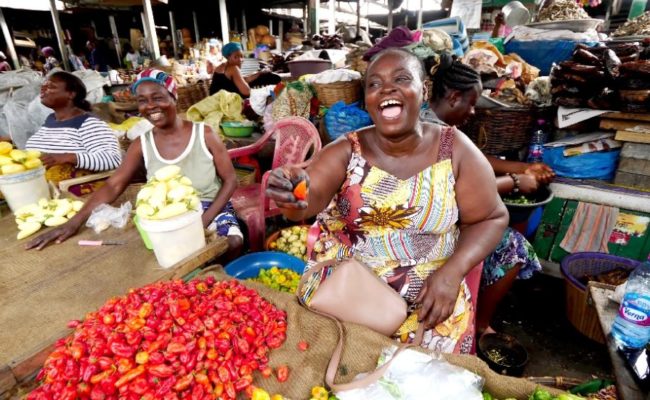
A survey conducted by the Institute of Economic Affairs (IEA) has indicated that most Ghanaians are happy with the current economic direction of the Country.
This is contained in a press release dated January 21.
Ghana experienced significant changes in 2025. A new government took office, and the macroeconomic environment improved significantly, though many socioeconomic challenges remain.
Against this backdrop, the Institute of Economic Affairs (IEA) conducted a nationwide poll to gauge public opinion on whether Ghana is headed in the right direction.
The nationwide public opinion poll was conducted across all 16 regions of Ghana between 20th and 28th December 2025.
According to the press release, “Based on responses from 1,022 respondents, the poll reveals that: Most Ghanaians (58%) are happy with the direction of the country.”
It added that, “The new government came with new economic and development policies, along with a leadership style which has sparked significant debate about where the country is headed.
Therefore, we asked citizens whether they were happy with the way things were going in the country. Most respondents (58%) said they were happy. By contrast, 34% indicated that they were not happy with how things were going, while 8% said they were not sure.
This result is not surprising, considering the macroeconomic gains recorded in 2025. The cedi appreciated by about 32% against the U.S. dollar between 2024 and 2025. The strengthening of the cedi, together with broader macroeconomic improvements, have helped ease inflationary pressures, which is reflected in the decrease in the price of fuel at the pump and in the cost of some imported consumer goods.
Hence, inflation declined sharply from 23.8% in 2024 to 5.4% in 2025.
Other positive developments which may have influenced people’s perception of the direction of the country include:
? The significant decline in the debt-to-GDP ratio from 61.8% at the end of December 2024 to 45% by the end of October 2025;
? The reduction in the average lending rate (cost of borrowing) from 30.2% to 22.2% over the same period; and
? The gradual recovery from the effects of the Domestic Debt Exchange Programme on citizens.
As a result, confidence is gradually returning to, and many Ghanaians are increasingly hopeful for a better tomorrow under the new government.
Notwithstanding the positives, the proportion of people (34%) who indicated they are not happy with the way things are going in Ghana shows that a sizeable minority of the population remains discontented about national progress.
This highlights the fragility of public optimism and underscores the importance of addressing issues that directly affect everyday life.
In conclusion, the survey results show that most Ghanaians are happy with the direction of the country. We attribute this level of satisfaction to the policies of the new government that have resulted in improvement in the economy and inspired hope in the people.
This renewed optimism presents a unique opportunity for the government to pursue bold structural reforms in Ghana to sustain the gains made.”
ABOUT: Nana Kwesi Coomson
 [email protected]
 An Entrepreneur, Corporate Social Responsibility, Corporate Communications Executive and Philanthropist. Editor-in-Chief of www.233times.com. A Senior Journalist with Ghanaian Chronicle Newspaper. An alumnus of Adisadel College where he read General Arts. His first degree is in Bachelor of Arts - Political Science (major) and History (minor) from the University of Ghana. He holds MSc in Corporate Social Responsibility (CSR) and Energy with Public Relations (PR) from the Robert Gordon University in the United Kingdom. He is a 2018 Mandela Washington Fellow who studied at Clark Atlanta University in USA on the Business and Entrepreneurship track.
View all posts by: Nana Kwesi Coomson


 (Selorm) |
  (Nana Kwesi)