Top 10 Strongest Passports in the World – 2026 Ranking
- Posted on
- Comment
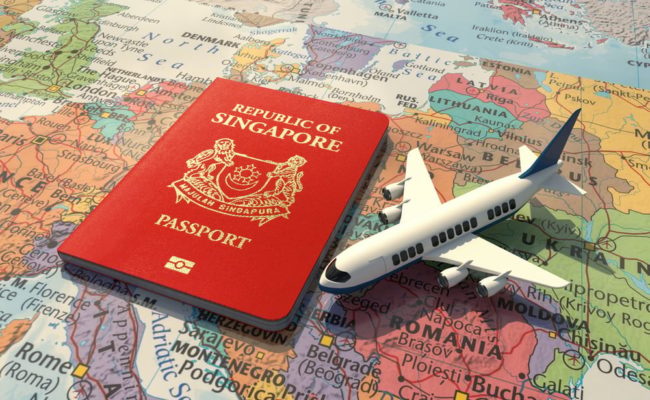
Singapore tops 2026’s strongest passports with 192 destinations. Japan, South Korea follow. US drops to 10th. Discover the full ranking & global mobility trends.
In an increasingly interconnected world, passport power has become a crucial indicator of global mobility, diplomatic influence, and international relations. The 2026 Henley Passport Index, which measures visa-free access to destinations worldwide, reveals fascinating shifts in global power dynamics and highlights which nations offer their citizens the greatest freedom of movement.
Note, passport strength is measured by the number of countries and territories holders can enter without obtaining a visa in advance. This metric reflects not just diplomatic relationships but also economic stability, political credibility, and international trust. The 2026 rankings demonstrate that geography, economic power, and diplomatic strategy all play crucial roles in determining passport strength.
The Top 10 Rankings
1. Singapore (192 destinations)
For the second consecutive year, Singapore maintains its position at the summit of global passport power. Singaporean passport holders enjoy visa-free access to 192 countries and territories, the highest number in the world. This achievement reflects Singapore’s strategic diplomatic initiatives, robust economy, and reputation as a stable, trustworthy nation. The city-state’s commitment to maintaining strong international relationships and its status as a global financial hub have solidified its position at the top.
2. Japan and South Korea (188 destinations)
)
Japan and South Korea Passports
Sharing second place, Japan and South Korea both provide their citizens with visa-free access to 188 destinations. Japan moved up from third place in the previous quarter, demonstrating its continued diplomatic strength and global respect.
Advertisement
South Korea has maintained its strong position, reflecting the nation’s economic prowess and increasing cultural influence worldwide. Both Asian powerhouses have invested heavily in bilateral agreements and have benefited from their reputations as technologically advanced, stable democracies.
3. Denmark, Luxembourg, Spain, Sweden, and Switzerland (186 destinations)
)
Spanish Passport
Five European nations tie for third place, each offering access to 186 destinations. Sweden made a particularly impressive jump from sixth to third place, while the other four countries maintained their strong positions. This group represents the pinnacle of European passport power, combining economic stability, democratic values, and strong diplomatic networks. Switzerland’s traditional neutrality, Luxembourg’s role in European finance, and the Nordic countries’ reputations for good governance all contribute to their high rankings.
4. Austria, Belgium, Finland, France, Germany, Greece, Ireland, Italy, the Netherlands, and Norway (185 destinations)
)
Austria passport
Ten European countries share fourth place, with passport holders able to visit 185 countries without visas. This impressive grouping includes both large economies like Germany, France, and Italy, as well as smaller but highly developed nations like Ireland and Finland. The European Union’s collective diplomatic weight and the Schengen Agreement’s internal mobility benefits have helped these nations maintain their strong positions. These countries represent some of Europe’s most economically stable and politically influential nations.
5. Hungary, Portugal, Slovakia, Slovenia, and the United Arab Emirates (184 destinations)
)
Portugal Passport
Five countries offer access to 184 destinations at fifth place. Notably, the United Arab Emirates stands out as the only non-European nation in this tier and has demonstrated the most remarkable progress over the past two decades. The UAE has added 149 visa-free destinations since 2006, climbing an impressive 57 places in the rankings. This extraordinary rise reflects the Emirates’ aggressive diplomatic strategy, massive investment in international relationships, and its transformation into a global business and tourism hub.
6. Croatia, Czech Republic, Estonia, Malta, New Zealand, and Poland (183 destinations)
)
Croatia passport
This diverse group spans three continents, with passport holders enjoying access to 183 countries. The inclusion of New Zealand highlights that passport power isn’t exclusively European, while the Eastern European nations in this tier demonstrate how EU membership and economic development have enhanced their global standing.
7. Australia, Latvia, Liechtenstein, and the United Kingdom (182 destinations)
)
United Kingdom Passport
Australia maintained its seventh-place position, reflecting its stable democracy and strong international relationships. However, the United Kingdom’s presence in this tier tells a more concerning story. The UK has recorded the steepest year-on-year losses among top-tier passports, now having visa-free access to 182 destinations—eight fewer than twelve months ago. This decline likely reflects the ongoing diplomatic and economic adjustments following Brexit, demonstrating how political decisions can have tangible impacts on passport power.
8. Canada, Iceland, and Lithuania (181 destinations)
)
Canadian Passport
Canada shares eighth place with Iceland and Lithuania, offering visa-free travel to 181 destinations. Canada consistently ranks ahead of its southern neighbour, the United States, maintaining strong diplomatic relationships worldwide. Iceland’s inclusion reflects the Nordic region’s exceptional global standing, while Lithuania’s position demonstrates the benefits of EU membership for Eastern European nations.
9. Malaysia (180 destinations)
)
Malaysia passport
Malaysia ranks ninth, representing Southeast Asia’s strong diplomatic standing in the global mobility landscape. As the only Southeast Asian nation besides Singapore in the top ten, Malaysia’s position reflects its balanced foreign policy, economic development, and reputation as a moderate, stable nation.
10. United States (179 destinations)
)
U.S Passport Ghana
The United States has returned to the top ten at tenth place with access to 179 destinations after briefly dropping out in late 2025. However, this masks a concerning long-term trend. The US has suffered the third-largest ranking decline over two decades, falling from fourth place in 2006 to tenth in 2026. This decline reflects shifting global power dynamics, changing diplomatic relationships, and perhaps a decrease in the automatic trust and welcome American passport holders once enjoyed.
ABOUT: Nana Kwesi Coomson
 [email protected]
 An Entrepreneur, Corporate Social Responsibility, Corporate Communications Executive and Philanthropist. Editor-in-Chief of www.233times.com. A Senior Journalist with Ghanaian Chronicle Newspaper. An alumnus of Adisadel College where he read General Arts. His first degree is in Bachelor of Arts - Political Science (major) and History (minor) from the University of Ghana. He holds MSc in Corporate Social Responsibility (CSR) and Energy with Public Relations (PR) from the Robert Gordon University in the United Kingdom. He is a 2018 Mandela Washington Fellow who studied at Clark Atlanta University in USA on the Business and Entrepreneurship track.
View all posts by: Nana Kwesi Coomson


 (Selorm) |
  (Nana Kwesi)