“I think it should no longer be the local authorities because they have not done it well; most of the monies go into private pockets,” he alleged.
GH¢300m target possible
The Minister added, “We should take the power of collection from the local authorities and give it to GRA so that if we are able to make GH?300 million annually, and we can give GH?50 million back to the local authorities for their projects.”
Paltry GH?31m collected in 2017
The Senior Minister disclosed that for the whole of 2017, total revenue from property rates from all the Municipal, District and Metropolitan Assemblies (MMDAs) amounted to about GH?31 million.
He was speaking at the launch of Regional Economic Outlook for sub-Saharan Africa, on the theme ‘Domestic Revenue Mobilisation and Private Investment’, launched in Accra yesterday.
GH?10.3m collected in Greater Accra in 2017
“With all the properties in Greater Accra, only GH?10.3 million was realised from property rates; this is obviously embarrassingly low,” he said.
In his view, “the local authorities lack the know-how or they don’t understand valuation.”
The Senior Minister was worried about the fact that more often than not, “instead of blocking loopholes, identifying what we are losing, we tend to look for new areas of increasing taxes”.
“As a country, we should look at the structure of this nation as it is today and use that structure to improve domestic taxation.”
Ghana must take advantage of urbanisation
Ghana is the most urbanised country in West Africa, with 54% of the population living in urban areas.
The fastest urbanised country in West Africa is Nigeria, but it has 47% of its people urbanised, so Ghana is well ahead of Nigeria. How do we use this to mobilise domestic resources, the Minister asked.
Ghana could make additional revenues from property rates, Mr Maafo stressed.
IMF calls for new revenue sources
In the report, the International Monetary Fund (IMF) urged Ghana and other countries in sub-Saharan Africa to develop new sources of taxation and harness new technologies that could facilitate access to more reliable information towards increasing revenue mobilisation.
The fund asked governments in the region to look at property taxes, among other avenues of raising additional capital for development purposes.
According to the report, “Since revenue mobilisation is a process that needs to be sustained for years to have a durable impact, countries need to build a constituency for reform, based on a credible commitment to improved governance and transparency.”
Domestic revenue mobilisation is one of the most pressing policy challenges facing sub-Saharan African countries.
Nearly all countries are seeking to raise revenues to make progress toward their Sustainable Development Goals while preserving fiscal sustainability, the report stated.
Despite substantial progress in revenue mobilisation over the past two decades, sub-Saharan Africa is still the region with the lowest revenue-to-GDP ratio, the fund said. “Examining structural factors that account for this underperformance, it is estimated that the region could, on average, mobilise between three and five per cent of GDP in additional tax revenues—significantly more than what the region has received each year from international aid. Key steps would be to strengthen value-added tax systems, streamline exemptions, and expand coverage of income taxes,” the report stated.
The fund pointed out that case studies of successful revenue mobilisation episodes in the region highlight the importance of medium-term revenue strategies to strengthen the basic building blocks of effective tax administration, emphasising efforts to broaden the tax base and modernising institutional processes.
Rising debt stock, cause for worry
Despite the growth pickup and improved external environment, the fund observed that public debt continued to rise in sub-Saharan Africa in 2017, pointing out that “about 40% of Poverty Reduction and Growth Trust (PRGT) eligible low-income developing countries in the region are now in debt distress or at high risk of debt distress.” Looking ahead, debt dynamics are susceptible to fiscal slippages, subdued growth outcomes, exchange rate depreciations, and tighter financing conditions.
Property rates can yield GH¢300m
- Posted on
- Comment
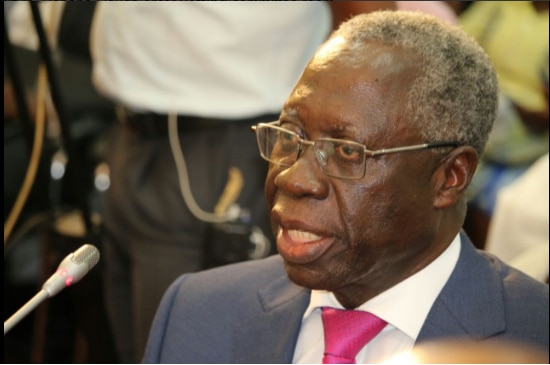 – Cede the collection to GRA – Senior Minister
SENIOR Minister, Yaw Osafo Maafo has asked the Ministry of Finance to cede the power of property rates collection to the Ghana Revenue Authority (GRA) since, according to him, the local authorities lack the know-how to effectively do the work.
ABOUT: Nana Kwesi Coomson
 [email protected]
 An Entrepreneur, Corporate Social Responsibility, Corporate Communications Executive and Philanthropist. Editor-in-Chief of www.233times.com. A Senior Journalist with Ghanaian Chronicle Newspaper. An alumnus of Adisadel College where he read General Arts. His first degree is in Bachelor of Arts - Political Science (major) and History (minor) from the University of Ghana. He holds MSc in Corporate Social Responsibility (CSR) and Energy with Public Relations (PR) from the Robert Gordon University in the United Kingdom. He is a 2018 Mandela Washington Fellow who studied at Clark Atlanta University in USA on the Business and Entrepreneurship track.
View all posts by: Nana Kwesi Coomson


 (Selorm) |
  (Nana Kwesi)