All BECE graduates will be placed – GES confirms
- Posted on
- Comment
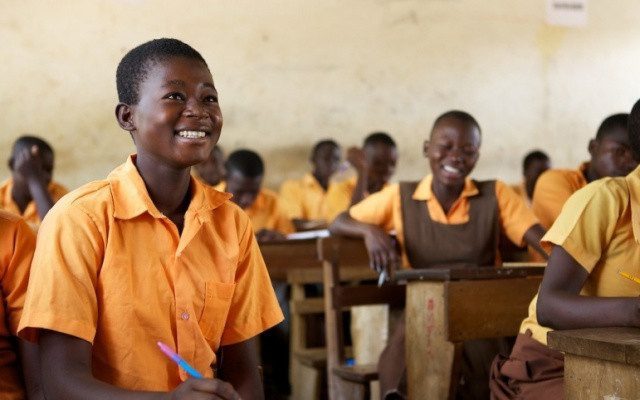
The Ghana Education Service (GES) has assured all Junior High School graduates that comprehensive arrangements have been put in place to accommodate every qualified student into Senior High and Technical Schools across the country when the 2026 academic year begins on September 18.
The assurance comes amid reports suggesting that about 72,000 students risk not being placed, claims the Service has firmly dismissed as inaccurate and misleading.
In a statement issued on May 14, the Management of the GES congratulated all candidates who successfully completed the Basic Education Certificate Examination (BECE) and urged the public to disregard the reports circulating in sections of the media.
“The report circulating in sections of the media suggesting that about 72,000 students risk not being placed is speculative and does not reflect the reality. We, therefore, urge the public to disregard it,” the statement read.
The Service stressed that all qualified candidates will be placed in senior high schools and technical institutions, adding that sufficient infrastructure and facilities have been made available nationwide to absorb incoming students.
“There are adequate infrastructure and facilities to accommodate all qualified students,” Management assured.
GES further addressed concerns about the ongoing phasing out of the double-track system, noting that the reform process will not limit access to secondary education.
It explained that the transition is designed to improve the quality of teaching and learning while ensuring continued access for all eligible students.
“It will rather improve the quality of teaching and learning while maintaining full access for all students,” the statement said.
The Service reaffirmed its commitment to equitable, inclusive and quality education, urging stakeholders, including parents, teachers and the general public, to support efforts aimed at strengthening the education system.
The GES also encouraged calm among parents and guardians, insisting that no qualified student would be denied placement due to capacity constraints.
ABOUT: Nana Kwesi Coomson
 [email protected]
 An Entrepreneur, Corporate Social Responsibility, Corporate Communications Executive and Philanthropist. Editor-in-Chief of www.233times.com. A Senior Journalist with Ghanaian Chronicle Newspaper. An alumnus of Adisadel College where he read General Arts. His first degree is in Bachelor of Arts - Political Science (major) and History (minor) from the University of Ghana. He holds MSc in Corporate Social Responsibility (CSR) and Energy with Public Relations (PR) from the Robert Gordon University in the United Kingdom. He is a 2018 Mandela Washington Fellow who studied at Clark Atlanta University in USA on the Business and Entrepreneurship track.
View all posts by: Nana Kwesi Coomson




 (Selorm) |
  (Nana Kwesi)